Pre-construction survey
Baseline condition of an existing line before adjacent works begin — the record that protects both parties if damage is later alleged.
Services
From a single manhole check to a kilometre-scale condition survey, the method is chosen to fit the pipe, the flow and the decision you need to make.
A six-wheel crawler is lowered into the manhole and driven through the pipeline while a surface operator records continuous HD video and logs the chainage of every defect.
This is the definitive survey method for mainline sewers, stormwater lines and box culverts. Because the camera travels on the invert with the pipe wall fully illuminated, cracks, joint displacement, root intrusion, deformation and debris are seen in context — not inferred from a surface symptom.

| Pipe diameter | 200 – 3000 mm |
|---|---|
| Survey length | up to 150 m per setup |
| Recording | HD video + defect stills |
| Positioning | encoder chainage + GPS |
| Access | one manhole entry and exit |
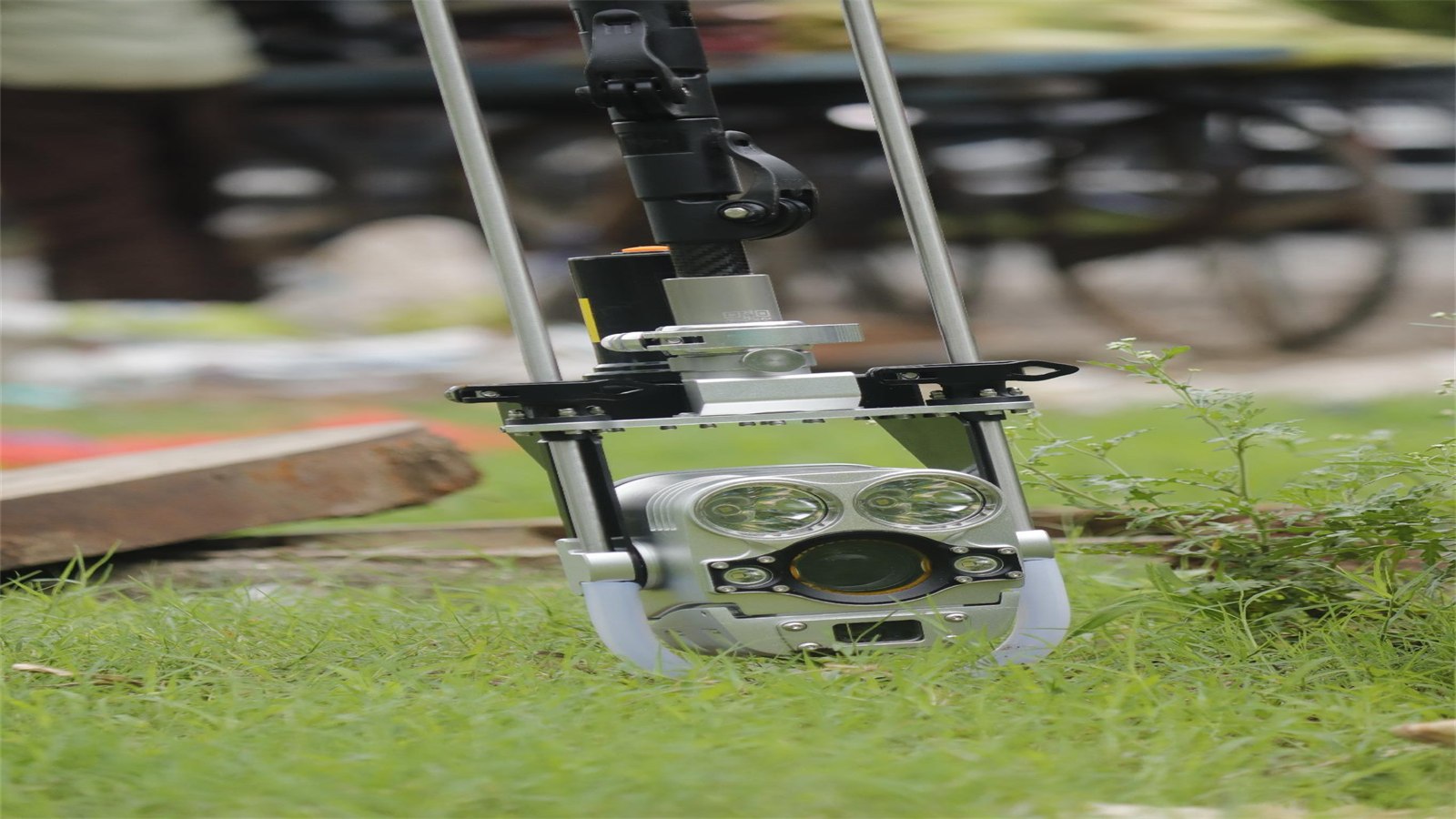
| Pipe diameter | 150 – 2000 mm |
|---|---|
| Reach | 12 m pole · 100 m laser range |
| Setup time | minutes, no reel or vehicle |
| Best for | manholes, culverts, large pipes |
| Crew | one or two people |
Not every question needs a crawler. The E25CHDW lowers a 300× zoom camera head into the chamber and reads the pipe from above — in minutes, from the surface.
It is the fastest way to screen a network, verify a complaint, check a culvert or confirm a connection before committing to a full mainline survey. Because there is no vehicle, no cable reel and no confined-space entry, it works in places a crawler crew cannot practically reach.
The video is the evidence. The report is the product. We grade every defect against a defined library and translate the footage into a maintenance decision.
Each defect is classified by type and severity, tied to a chainage and a manhole reference, and illustrated with a still frame. The result is a condition summary that separates what must be repaired now from what can be monitored — and what simply needs cleaning.
Cracks, breaks, deformation and joint faults, graded for collapse risk and remaining asset life.
Roots, silt, encrustation and obstructions, graded for hydraulic capacity loss.
Every report closes with a recommendation: monitor, clean, repair, line or replace — with the evidence that supports it.
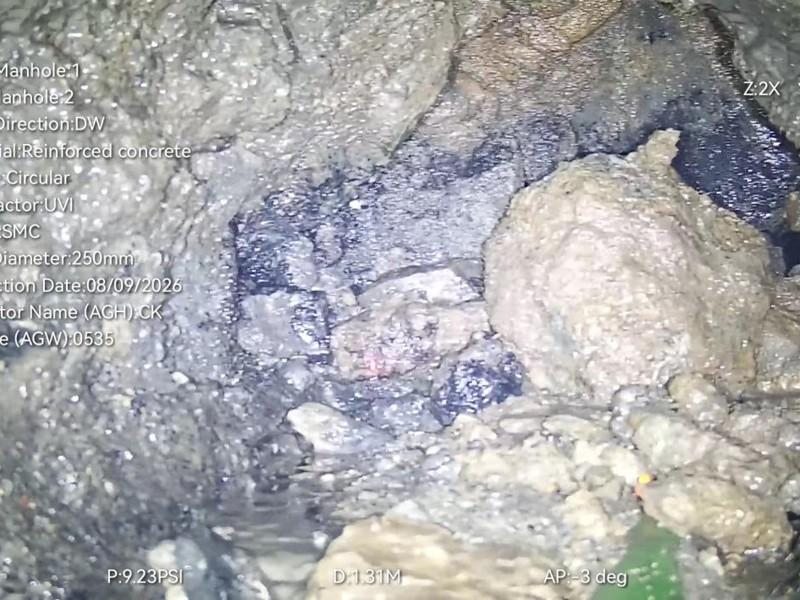
CCTV still · Kargil Chowk, damaged section identified
| Condition summary | per run and per manhole |
|---|---|
| Defect register | type · severity · chainage |
| Photographic log | still per defect |
| Video index | timestamped reference |
| Recommendations | prioritised actions |
An inspection that lives in a folder is a cost. An inspection that lives in a map is an asset. We convert survey results into spatial records your team can query, filter and plan from.
We are ready to adopt additional GIS platforms and advanced spatial tools as a project's needs grow.
Data flow
Video, stills and chainage captured on site.
Graded and located against the defect library.
Manhole coordinates and pipe runs joined to the data.
QGIS layers, spreadsheet and report handed over.
Also available
Baseline condition of an existing line before adjacent works begin — the record that protects both parties if damage is later alleged.
Verification that a newly laid or rehabilitated line is clean, aligned, jointed correctly and free of debris before handover.
Return survey after cleaning or repair, compared against the original record to confirm the defect has actually been resolved.
Indicative rates
Robotic CCTV inspection is charged per metre of accepted inspected length, by pipe diameter. Rapid periscope inspection is charged per manhole. Final billing follows the approved work order.
| Mobilisation / demobilisation | ₹500 per site |
|---|---|
| E25 periscope rapid inspection | ₹500 per manhole |
| GST | as applicable |
Rates are indicative and exclude dewatering, jetting, traffic management, confined-space support and civil works unless specifically quoted.
S200 robotic CCTV inspection / condition assessment, per metre of inspected length.
Send us the pipe diameter, length and what you suspect. We will recommend the cheapest method that actually answers the question.