Field evidence · 2026
Five sites. The findings, including the inconvenient ones.
Surat Municipal Corporation drainage assessments carried out between August and September 2026. Each report below records what we observed, what was done and what should happen next.
Site report 01
Suda Sanskruti Residency
Water sat between 80% and 100% of pipe height, restricting the pipe crown and destabilising the camera. A vertical pipe displacement was visible in the main run — but not measurable from the surface alone.
Site parameters
| Pipe | 250 mm circular RCC |
|---|---|
| Run | MH-01 → MH-02 |
| MH-01 depth | 2.6 m |
| MH-02 depth | 2.8 m |
| Equipment | E25 periscope |
Observed problems
- 80–100% water level restricted crown visibility
- High flow turbulence caused camera instability
- Vertical pipe displacement in the main run
Next action: deploy the S200 crawler under a controlled lower water level to pinpoint the displacement length before any repair is designed.
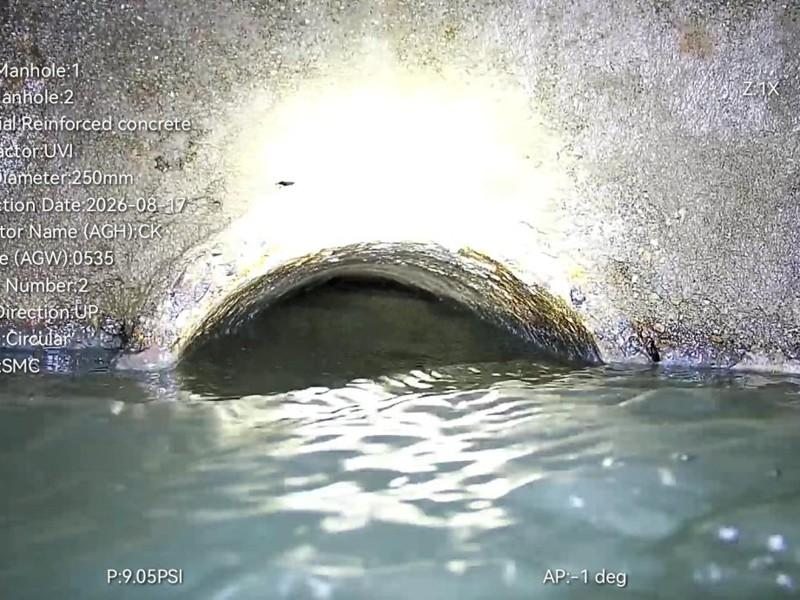
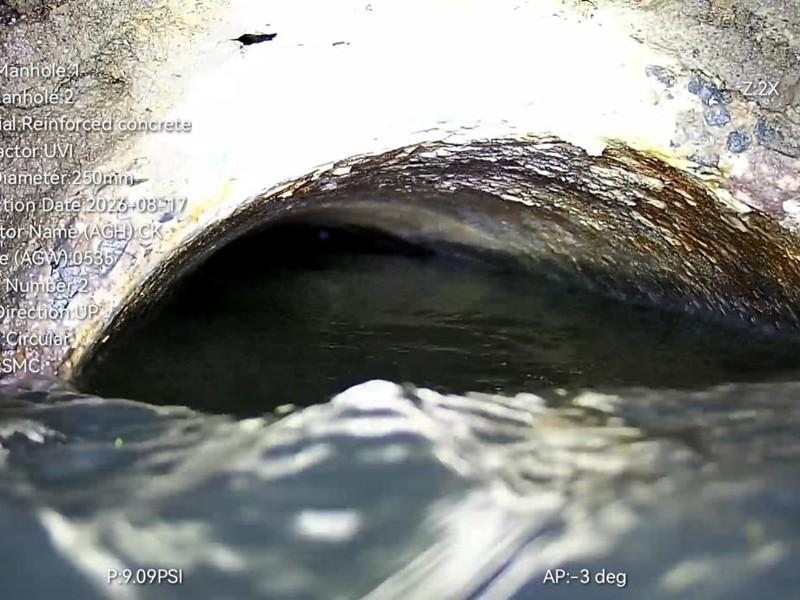
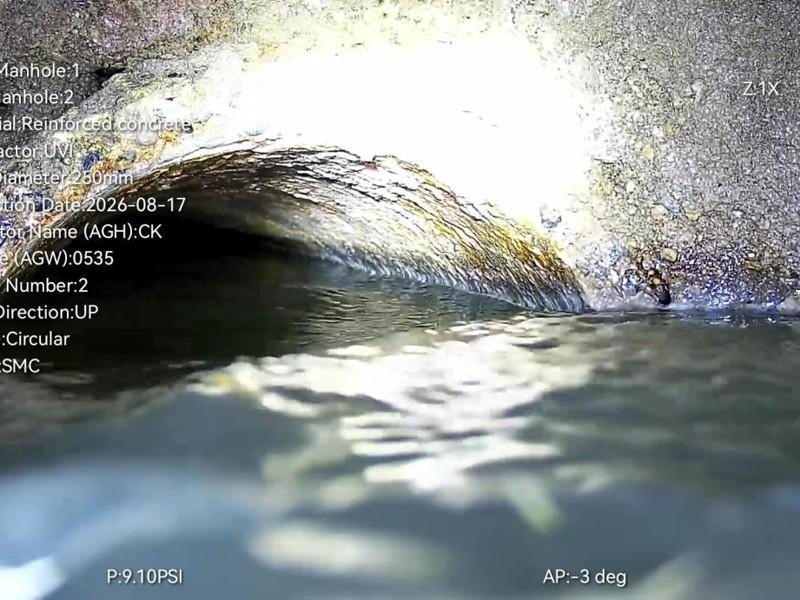
E25 periscope stills · Manhole 01 to Manhole 02
Site report 02
Kargil Chowk rainwater line
A blocked rainwater line between MH-1 and MH-2. Cleaning revealed both the cause of the blockage and a problem that cleaning cannot fix.
Work executed
- High-pressure water jetting between MH-1 and MH-2
- Suction removal of loosened silt around MH-2
- Approximately 0.7 m of heavy silt removed
- Hydraulic flow passage significantly improved
Findings
- Heavy silt build-up was the primary blockage
- A broken and collapsed pipe section in the final run
- Structural repair required before CCTV continuation
Next action: repair the collapsed section, then resume the CCTV survey to confirm the condition of the remainder of the line.
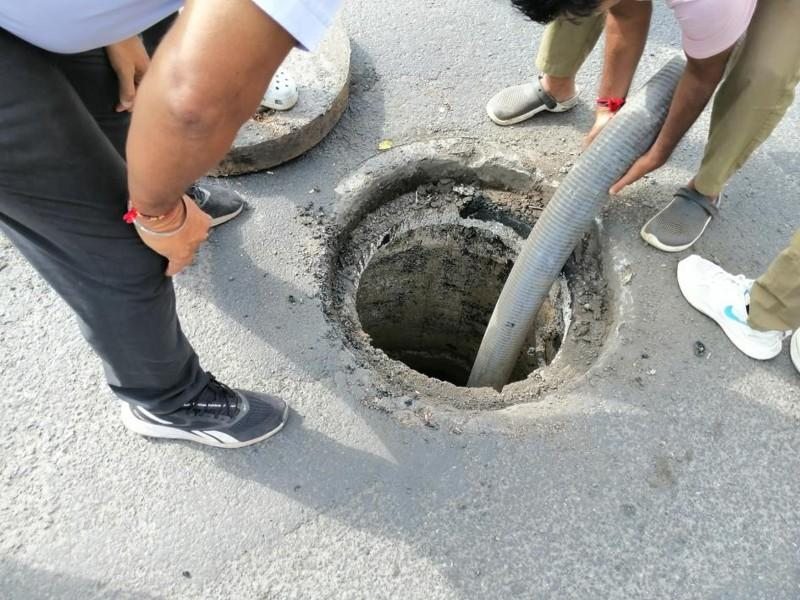
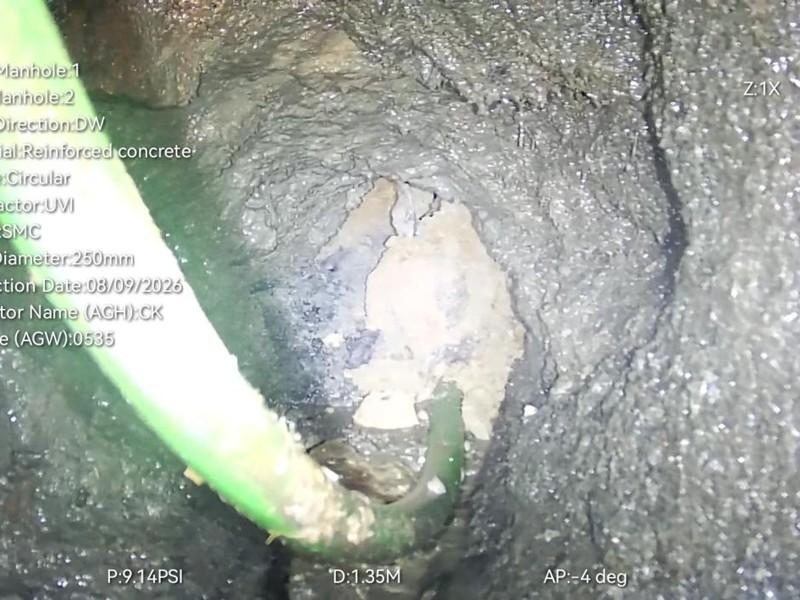
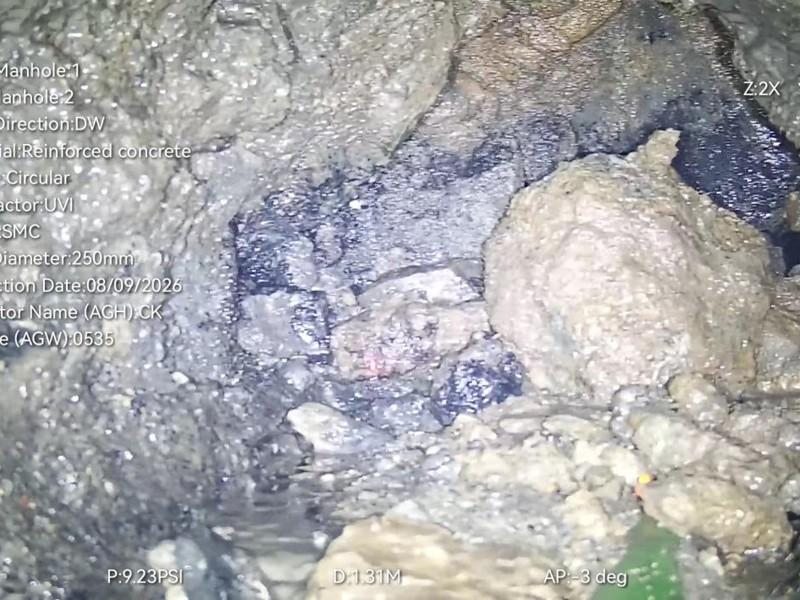
Kargil Chowk · cleaning operations and CCTV evidence
Site report 03
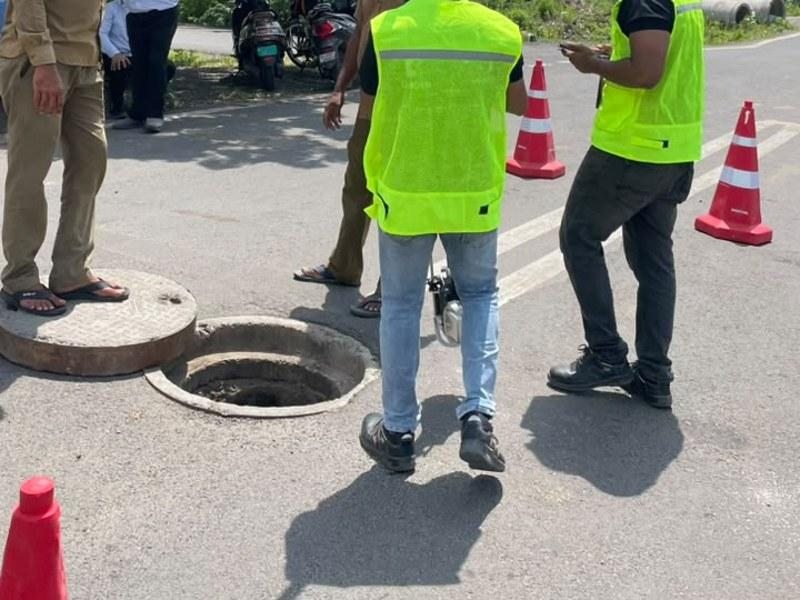
L P Savani deep manhole
The pipe inlet was completely submerged six metres down, and heavy flow churn made visual contact both unsafe and impractical. The correct decision was to stop.
Condition found
- 100% water level — inlet fully submerged
- Extreme turbulence from heavy flow churn
- No reliable visual contact possible
Operational action
- Inspection paused rather than guessed
- Optical distortion and electronics risk avoided
- Site conditions recorded for the report
Recommendation: do not rely on partial visibility for critical engineering decisions. Perform temporary flow bypass or deploy plug controls, then re-inspect with the S200 crawler during off-peak dry-weather hours for 100% clear evidence.
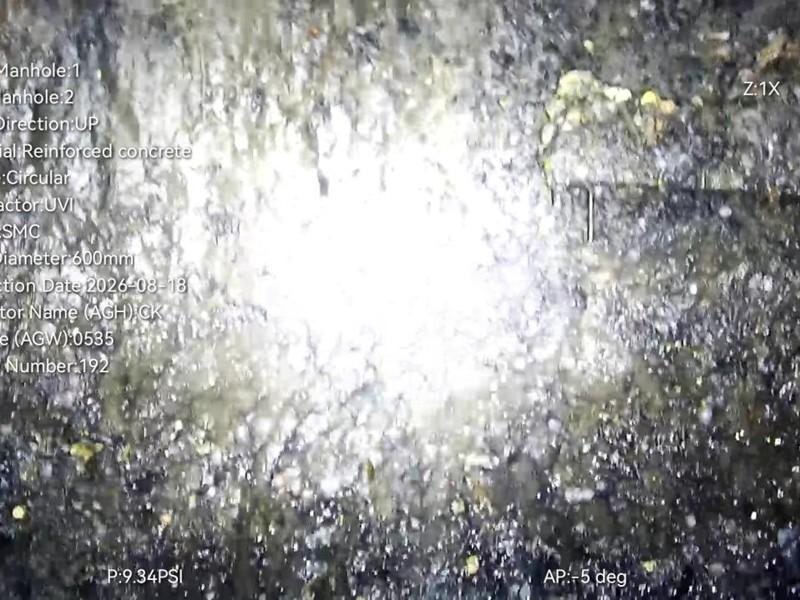
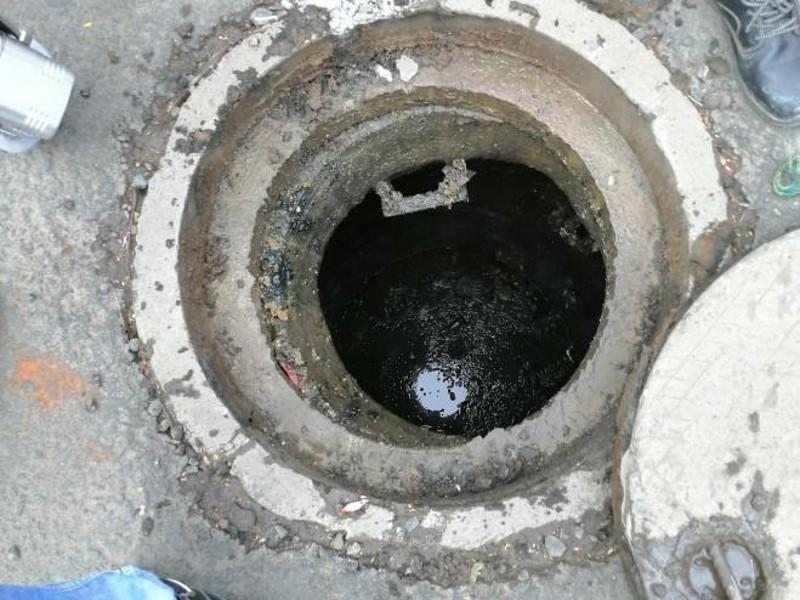
L P Savani · open manhole and internal pipe view
Site report 04
Bhimpore SPS pipeline
A 1,200 mm line packed with debris and turbid water. Only 0.90 m could be inspected — and that is exactly what the report says.
Findings
- Heavy debris inside the 1200 mm pipeline
- Partial inspection only: 0.90 m completed
- Completed from SPS manhole to MH-01
- Upstream MH-03 to MH-04 not done — turbid, packed line
Recommendations
- Clean the pipeline and remove accumulated debris
- Re-inspect MH-03 to MH-04 when water level and flow allow
- Use flow diversion or bypass pumping for clear evidence
Reported honestly: a partial survey is stated as partial. Inspected length is billed on accepted length, and the un-inspected section is flagged for re-survey rather than assumed.
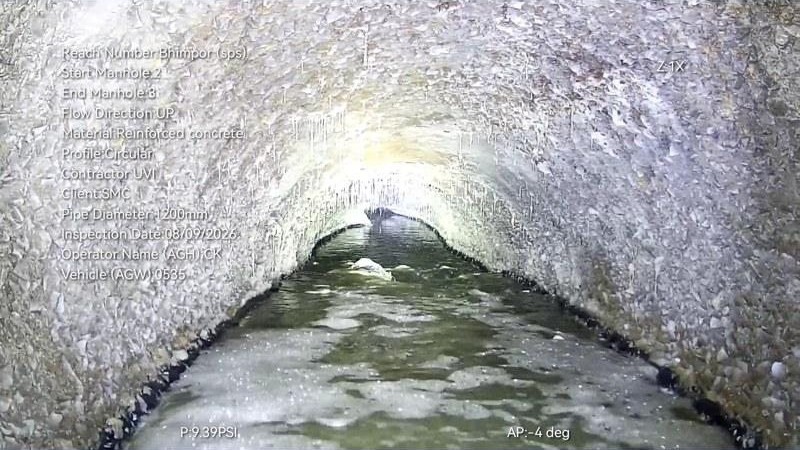
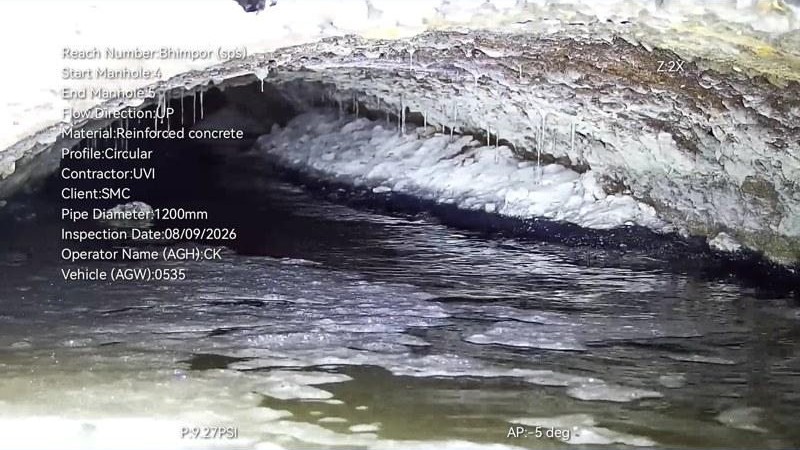
Bhimpore SPS · 1200 mm line, upstream direction
Site report 05
Athwagate buried manhole
The manhole had been paved over by metro construction. Locating it was the work; inspecting it was not possible on the day.
Findings
- Manhole covered by metro works; located by road excavation
- Large, compact debris packed inside the chamber
- Suction could not remove the material
- Traffic could not be stopped in the college area
Recommendations
- Desilt the manhole by jetting or mechanical means
- Plan the revisit with prior permission and traffic control
- Keep the manhole marked and accessible for the survey
Next action: desilt and clear the chamber, secure traffic control, then run the CCTV inspection. The manhole should not be re-covered without a record.
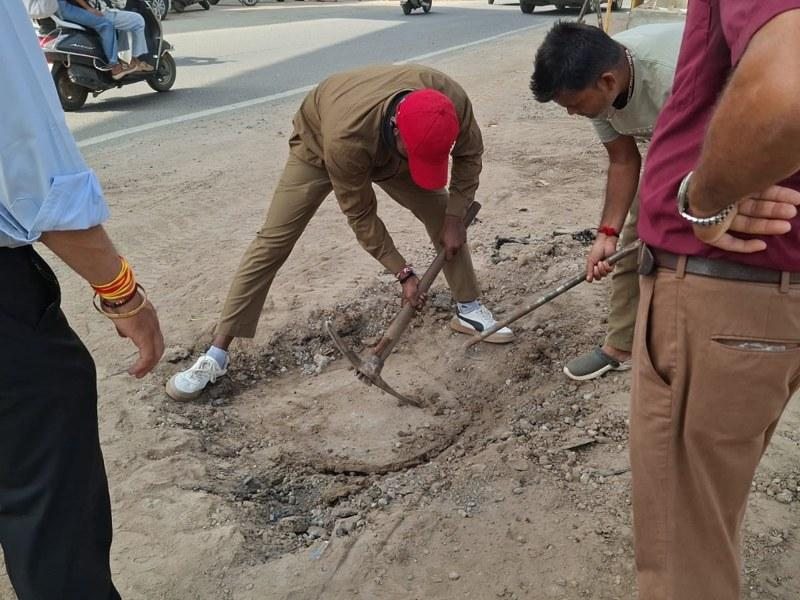
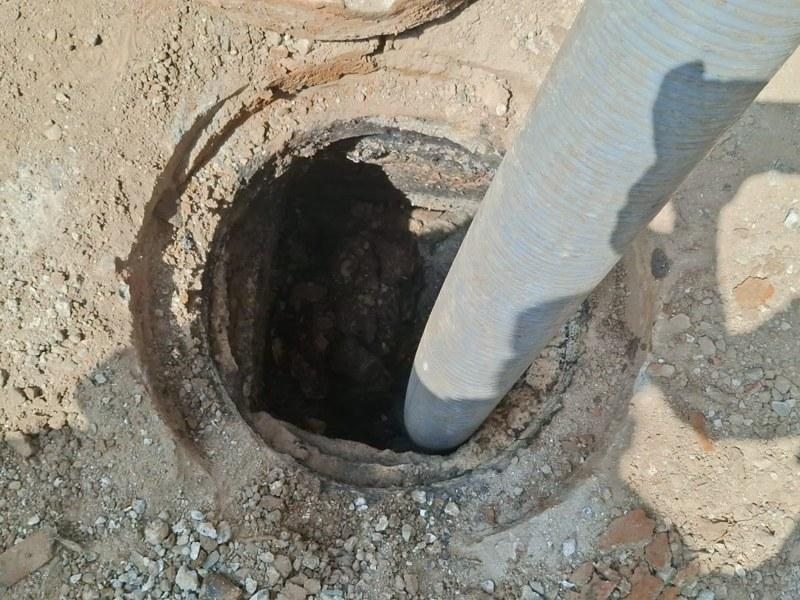
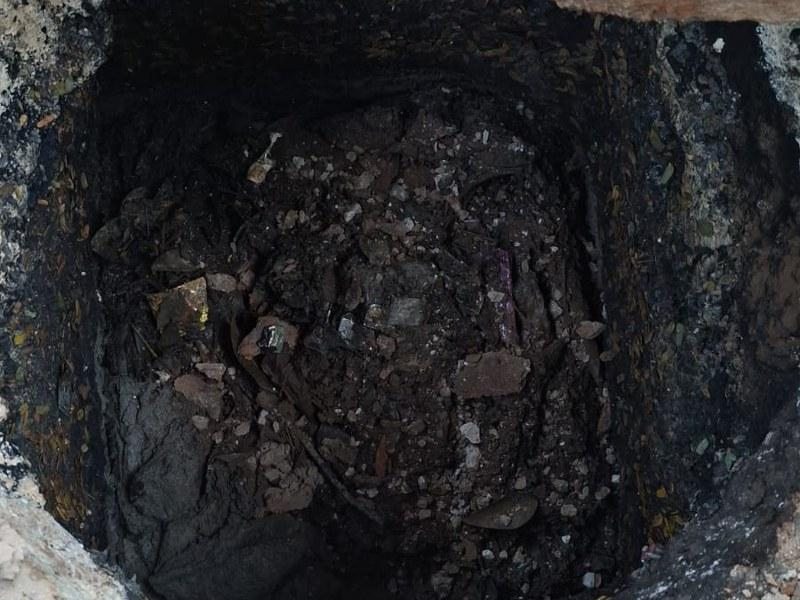
Athwagate · buried and debris-packed manhole
Clean, control the flow, inspect, document, map — then repair.
Across all five sites, the pattern was consistent: where flow and silt were controlled, the survey produced clear, usable evidence. Where they were not, the honest answer was to come back.
That sequence — not the camera — is what turns an inspection into asset management. Repair decisions should follow verified CCTV evidence, not a symptom reported from the street.
Five findings, summarised
- Suda Sanskruti — high water and turbulence; controlled-flow crawler inspection recommended.
- Kargil Chowk — heavy silt removed; broken / collapsed section requires structural repair.
- L P Savani — 100% water and extreme turbulence; flow control required before re-inspection.
- Bhimpore SPS — heavy debris and turbid water; cleaning and upstream re-inspection required.
- Athwagate — buried, debris-packed manhole; desilting and traffic-controlled access required.
Have a line that keeps failing?
Tell us where and what has been happening. We will tell you whether a survey can answer it.